Injection molding
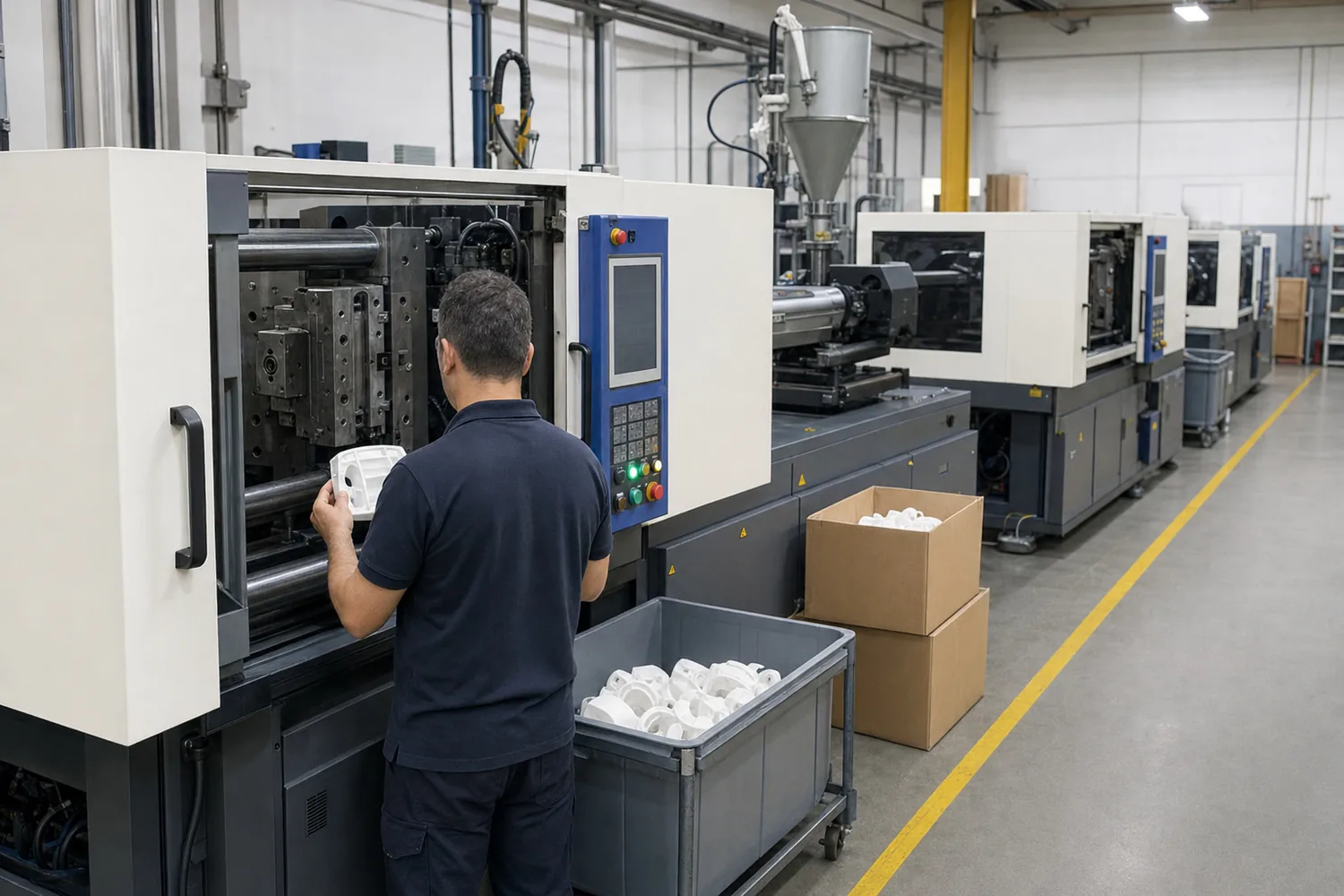
Injection molding makes plastic parts by pushing melted resin into a mold, letting it cool and ejecting the part. The mold comes first, and it takes money and several weeks to build. After that, each part takes seconds and costs little.
What the work includes
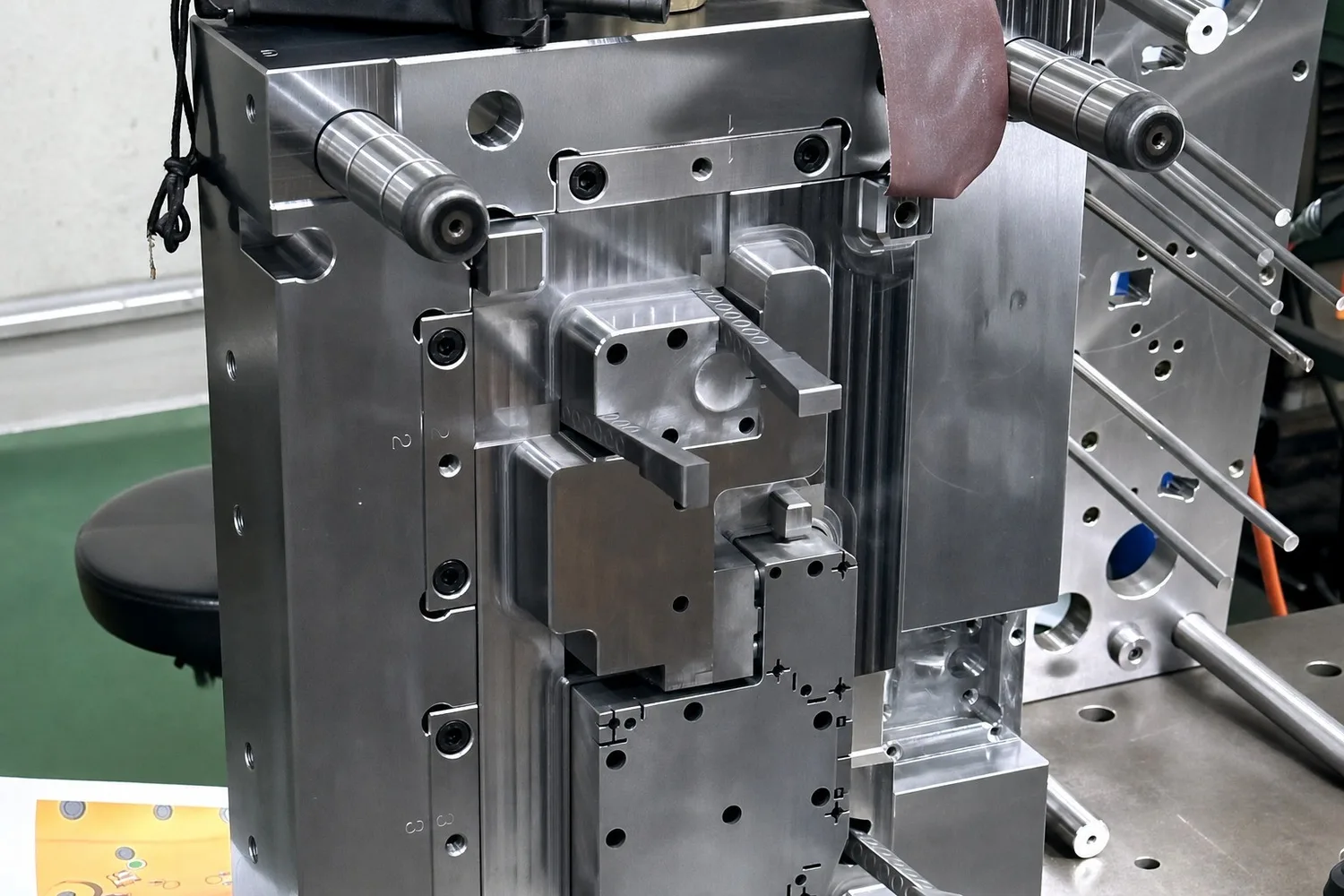
- Mold making. The mold is machined, with electrical discharge machining (EDM) for deep ribs and sharp inside corners a cutter can't reach, then fitted and assembled.
- Trial shots and production. The first shots show what to adjust in the mold. Once you approve the sample, the same mold runs production.
What it makes and when to choose it
Enclosures, covers, buttons and internal frames.
Choose it once the design is settled and you need a few hundred units or more, the point where an aluminum mold starts to pay. Below that, compare urethane casting, CNC machining and 3D printing.
Common materials
| Material | Chosen for |
|---|---|
| ABS | The usual enclosure plastic: tough, inexpensive and easy to mold, with a good finish from matte to gloss. |
| PC/ABS | Tougher and more heat-resistant than ABS. Flame-retardant grades are common in powered products. |
| Polycarbonate (PC) | The highest impact strength of the common enclosure plastics, with clear grades. |
| Polypropylene (PP) | The cheapest and lightest. It resists cleaners and makes living hinges. |
| Nylon, glass-filled | Stiff, strong and heat-resistant, for brackets, frames, clips and gears. |
| TPU or TPE | Soft, grippy and sealing, molded on its own or over a rigid part. The grade must match the rigid plastic, or it peels off. |
Finishes
Mold texture, painting, pad printing, laser marking
Design guidelines for injection molding
| Feature | Guideline |
|---|---|
| Wall thickness | Keep walls even. Typical ranges: ABS 1.1–3.6 mm, polycarbonate 1.0–3.8 mm, polypropylene 0.9–3.8 mm, nylon 0.8–2.9 mm. |
| Thickness changes | Change thickness gradually, over about three times the step. Sudden changes cause stress and warp, and thick sections cause sink marks and voids. |
| Draft | At least 0.5° on vertical faces; 1–2° is typical. Allow 3° for a light texture and 5° or more for a heavy one. |
| Ribs | 40–60% of the wall they join, no taller than about 2.5 times the wall, with at least 0.5° of draft per side. |
| Bosses | Boss wall no more than 60% of the main wall. Tie bosses to a wall or rib. |
| Corners | Inside radius at least half the wall; outside radius equal to the inside radius plus the wall. |
| Undercuts | Avoid them where you can. A pass-through opening can replace a slide; each side action adds tooling cost. |
| Gates and ejector pins | Keep them off visible faces. We agree their positions with the factory before tooling. |
| Texture and finish | Choose early: the texture sets the draft. |
| Tolerances | Molded parts typically hold about ±0.1 mm on small features, and more as the part gets larger, depending on how much the resin shrinks. Tighter numbers go on the drawing, on the features that need them. |
Aluminum or steel mold?
| Aluminum or steel mold? | Aluminum mold | Steel mold |
|---|---|---|
| Fits when | The first run may still change the design, or demand is not proven yet | The design is settled and volume will outgrow an aluminum mold |
| Typical life | A few thousand to tens of thousands of shots | About 50,000 to 500,000 shots in pre-hardened steel; 500,000 to a million or more in hardened steel |
| Design changes | Quick to re-machine where metal is cut away. Adding metal back usually means a new insert. | Slower and more costly |
| Plastics | Unfilled plastics such as ABS, PC/ABS and polypropylene | Most plastics, including glass-filled and high-temperature grades |
| Ownership | You own the mold | You own the mold |
A shot is one cycle of the mold. Compare a mold's life with your plan in shots, not units.
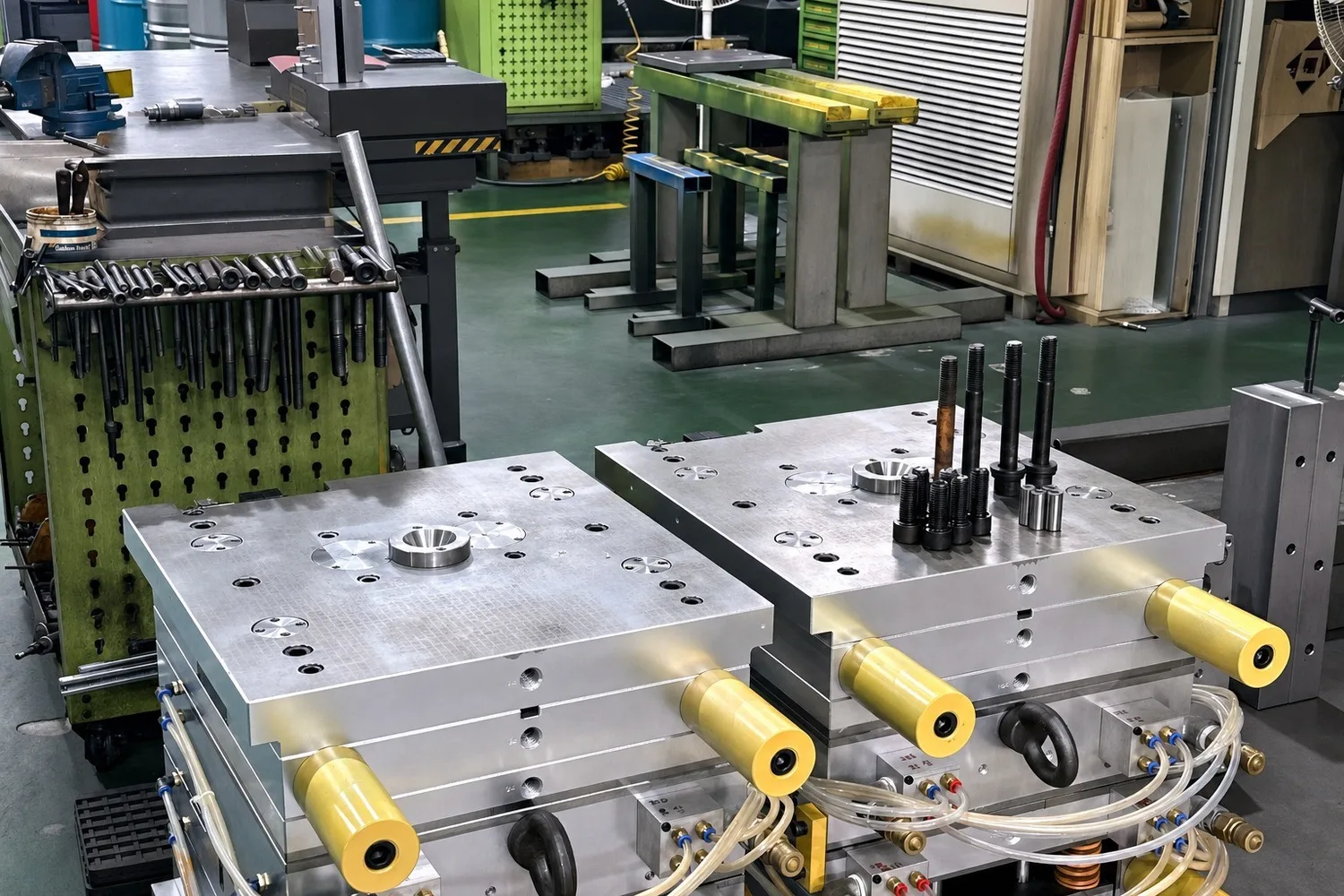
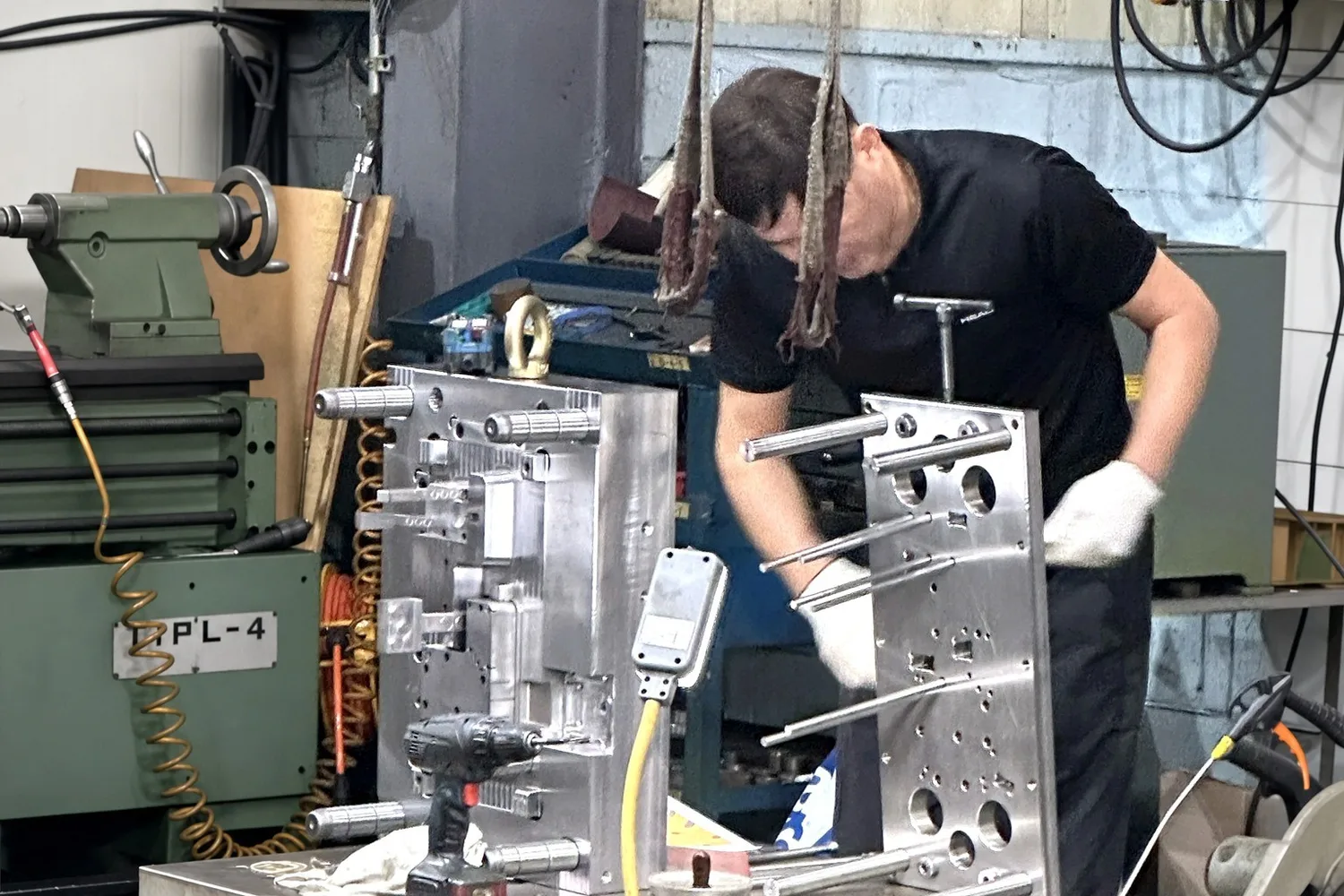
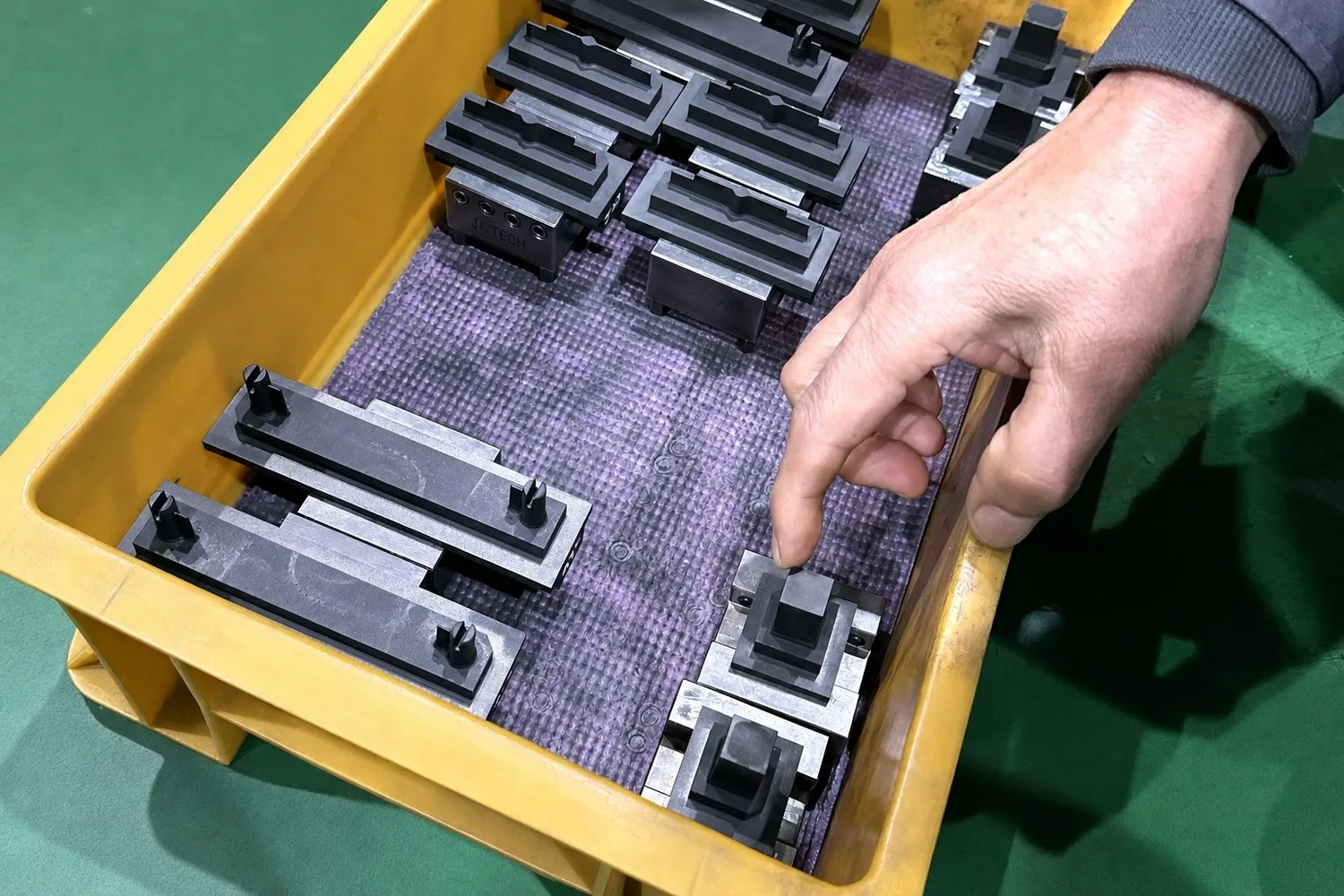
Photographs from the shop floor
Specialty molding
Beyond a single material in a single shot, these are the molding processes we use when the part calls for them.
Insert molding
A metal or plastic insert, such as a threaded bushing, is placed in the mold and the plastic is molded around it. It gives strong threads and electrical contacts in one step.
Overmolding
A molded part goes into a second mold, and a second material, often a soft one, is molded over it. It suits grips, seals and buttons at lower volumes. The two materials must bond, or the part needs features that lock them together.
Two-shot (2K) molding
Two materials are molded in one machine and one cycle, with a mold that rotates between shots. It does the work of overmolding at higher volumes, usually above about 10,000 parts.
Multi-shot (3K) molding
Three materials or colors in one part and one cycle, for multi-color buttons, grips and seals.
Gas-assist molding
Pressurized gas hollows out thick sections while the part fills. Handles and thick frames come out lighter, with less sink and warp.
Micro molding
Very small, precise parts, down to a few milligrams, such as small gears and connectors.
Liquid silicone rubber (LSR) molding
Liquid silicone is injected and cured with heat. It makes soft, heat-resistant parts such as gaskets, seals and buttons.
Compression molding
A measured charge of rubber or silicone is pressed into shape and cured. The tooling costs less, and it suits gaskets, O-rings and larger rubber parts.
Secondary operations
What happens to a molded part after it leaves the mold.
- Painting and coating. Color, soft-touch and protective coats.
- Plating. A metal layer, for a chrome look or for shielding.
- Pad printing and screen printing. Logos, icons and markings printed on the part.
- Laser marking. Permanent marks such as serial numbers and symbols.
- In-mold labeling. A printed film is placed in the mold and becomes part of the surface.
- Ultrasonic welding. Two plastic parts joined without screws or glue.
- Heat-set inserts. Threaded metal inserts pressed into bosses with heat or ultrasound.
- Heat staking. Plastic posts melted over to hold a board or a second part.
- Drilling and tapping. Holes and threads cut after molding, where the mold can't form them.
- Adhesive bonding. Parts glued where welding doesn't suit the material.
Assembly, functional test and packaging have their own page. Assembly, test and packaging →
Frequently asked questions
How many shots does an aluminum injection mold last?
An aluminum injection mold usually lasts a few thousand to tens of thousands of shots, or mold cycles, against about 50,000 to 500,000 for pre-hardened steel such as P20. Glass-filled plastics wear aluminum faster, and shops' claims for the same grade range from 2,000 to a million or more, so ask the molder for the shot count it will commit to in writing.
When should you switch from an aluminum mold to a steel mold?
Switch once the design is frozen and demand will outgrow the shot count the aluminum mold is rated for. Order the steel mold while the aluminum one still has enough life to cover building and sampling the steel mold, often two to three months of demand, and keep the aluminum mold until the steel parts are approved.
What is a family mold in injection molding?
A family mold is one injection mold with cavities for several different parts, so each shot makes a set, such as the top and bottom of a case. A multi-cavity mold, by contrast, makes several copies of one part. Family molds suit parts in the same plastic and color, close in size, and needed in equal numbers.
What does steel-safe mean in injection molding?
Steel-safe means starting fit-critical features with slightly less plastic, such as a hole a little large or a snap hook a little thin, so the toolmaker can bring them to size by cutting steel out of the mold. Cutting steel out is much easier than adding it back, and the first parts from a new mold often need tuning.
Other processes
We work fromSTEP · IGES · STL · Drawings · Photos
Tell us what you're building and how many you plan to make.
A real person on our team will reply with a first look at your production run and a few times to talk.
Free first look. We reply within two business days. Sending a request doesn't commit you to a project.