3D printing
3D printing builds a part layer by layer, straight from the CAD file, in resin (SLA) or nylon powder (SLS and MJF). It needs no tooling, so there is no cost up front. In resin the price per part changes little with the quantity; in nylon powder it drops as more parts share one build.
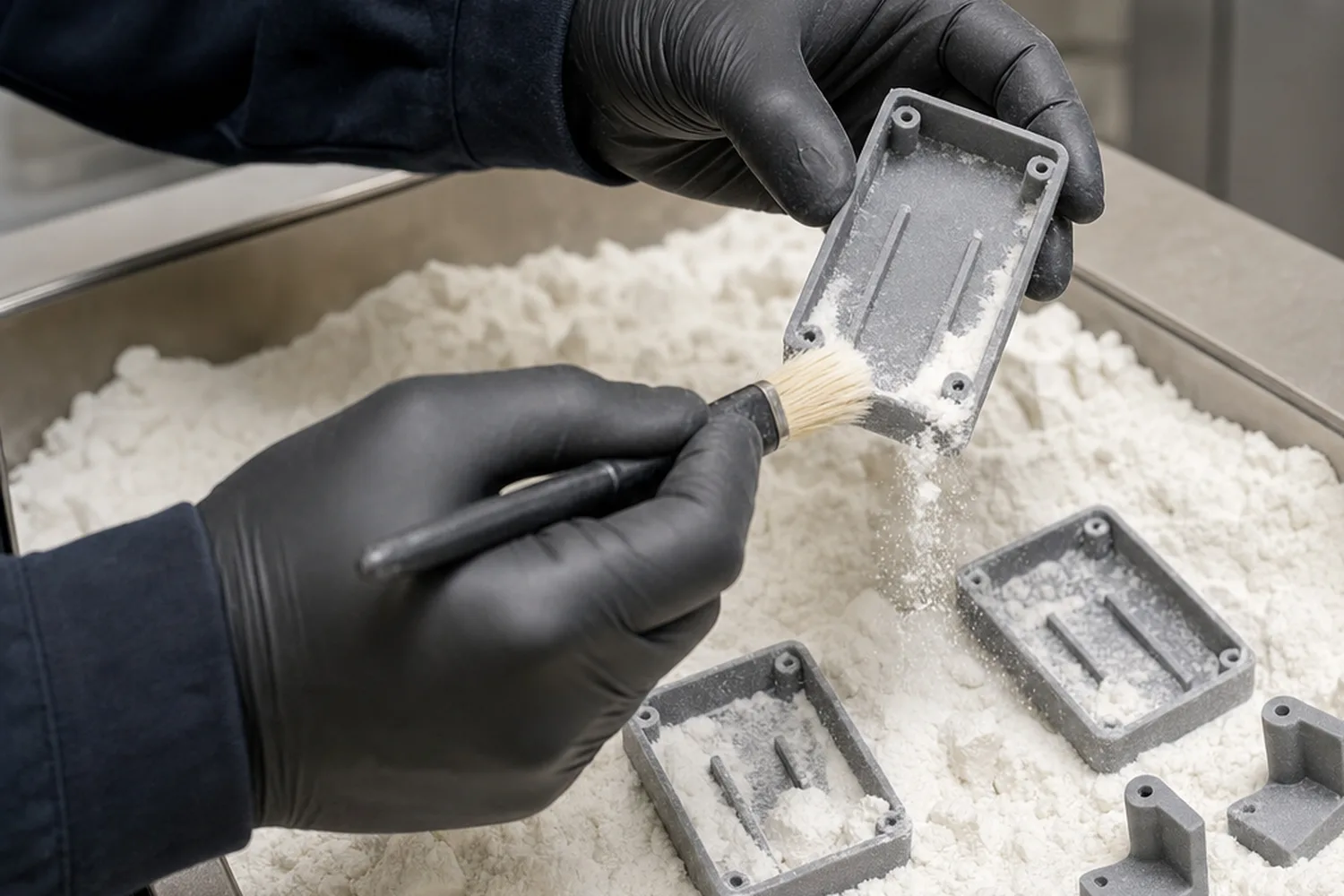
What the work includes
- Resin printing (SLA). A laser cures liquid resin one layer at a time. It gives the smoothest surface and the finest detail.
- Powder printing (SLS and MJF). Nylon powder is fused one layer at a time. It needs no supports, and many small parts are packed into one build, which keeps the cost per part down as the quantity grows.
- Finishing. Supports and loose powder are removed, and resin parts are washed and cured. Nylon parts are usually blasted and dyed. Faces that will show are sanded or painted.
What it makes and when to choose it
Prototypes, fit-check parts, jigs and test fixtures, and small batches of small parts.
Choose it for the first parts and while the design may still change: a change costs only a new file. For small parts it stays competitive from one part to a few hundred. The surface shows layers or grain, and most printing materials are not the production plastic. For parts that must look molded, compare urethane casting; from a few hundred up, compare an aluminum mold.
Common materials
| Material | Chosen for |
|---|---|
| Standard and tough resins (SLA) | Smooth surfaces and fine detail, for appearance models and fit checks. |
| Clear resin (SLA) | Windows, light pipes and see-through housings for early tests. Clear only after polishing or a clear coat, and it can yellow over time. |
| Nylon PA12 (SLS, MJF) | Strong functional parts. Some products ship in it. |
| Glass-filled nylon (SLS, MJF) | Stiffer parts such as brackets and fixtures. |
| TPU (SLS, MJF) | Flexible parts such as grips and bumpers. |
Finishes
Nylon: bead blasting, dyeing (usually black), vapor smoothing. Resin: sanding, priming and painting, clear coat on clear parts.
Frequently asked questions
How do I find the break-even point between 3D printing and an injection mold?
A mold becomes cheaper than printing once the quantity is more than the mold cost divided by the difference in cost per part. Work it out for each plastic part, since each usually needs its own mold, and add what quotes often leave out: the redesign a mold needs first and changes after the first samples. Get quotes at your quantity, one lower and one higher.
Do I need to redesign a 3D-printed prototype before injection molding?
Usually, yes. A printer builds almost any shape, but a molded part has to fill the mold evenly, cool without warping and slide straight out when the mold opens. The usual changes are choosing the production plastic first, even and usually thinner walls, draft, ribs and bosses instead of thick sections, fewer undercuts, rounded corners, and joints designed for the production plastic.
Other processes
We work fromSTEP · IGES · STL · Drawings · Photos
Tell us what you're building and how many you plan to make.
A real person on our team will reply with a first look at your production run and a few times to talk.
Free first look. We reply within two business days. Sending a request doesn't commit you to a project.